Transformational Medicine
Transformational Medicine is the integration of Nondual healing (Trika) with the living systems of Ayurveda, Daoist medicine, CranioSacral Work, and Inner Alchemy. It does not treat symptoms in isolation. It addresses the fragmentation, of mind from body, of self from wholeness, that underlies most chronic suffering.
Healing is overarching concept. Healing includes all efforts to heal the body, mind and spirit or to preserve health. Healing can include prayers, incantation, use of entheogen, exorcism, massage, administration of substance that alter the state of body and/or mind.
All medicines have root in healing traditions. However, a healing tradition becomes medicine when its practitioners recognize laws of nature and use only these laws of nature to investigate and describe body’s functions and dysfunctions. In medicine the principles of diagnosis, treatment, and prognosis are based solely on the laws of nature. On the other hand healing doesn’t require the healer to define their practice on any principles or laws or any objective phenomenon.
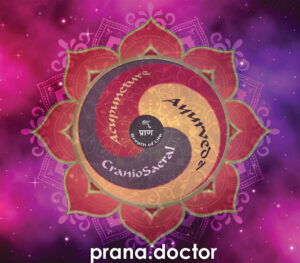
Ayurveda, Chinese Medicine and Cranial Osteopathy (from which CranioSacral Work is derived) recognize the laws of nature and use these laws of nature to diagnose and treat illness.
Traditional medicines focus on complete state of wellbeing of person as a whole, not just disease or condition.
Health: a state of complete physical, mental and social well-being and not merely the absence of disease or infirmity.
~World Health Organization
Traditional Medicine and Spirituality
Ayurveda, Chinese Medicine, CranioSacral, Tibetan Medicine, view dis-ease as an state of imbalance within physical, subtle, or mental aspects of living being. These imbalances are caused by blockages which can be physical, sensual, mental, or otherwise. The imbalances within makes a person feels dis-connected, dis-integrated, dis-eased, and therefore one does not feel whole.
Dis-ease is fixation. Health is movement. Energy flow is the primary factor.
~Dr. Stone (Polarity Therapy)
Traditional medicine practice not only helps to alleviate illness, but also has the capacity to enable each individual to live a more actualized life, to move through life’s trials with a greater degree of grace, understanding, growth, and wisdom.
It helps people to live more fully and that becomes the ground on which people can find their own path to rediscover this natural state of wholeness and connectedness.
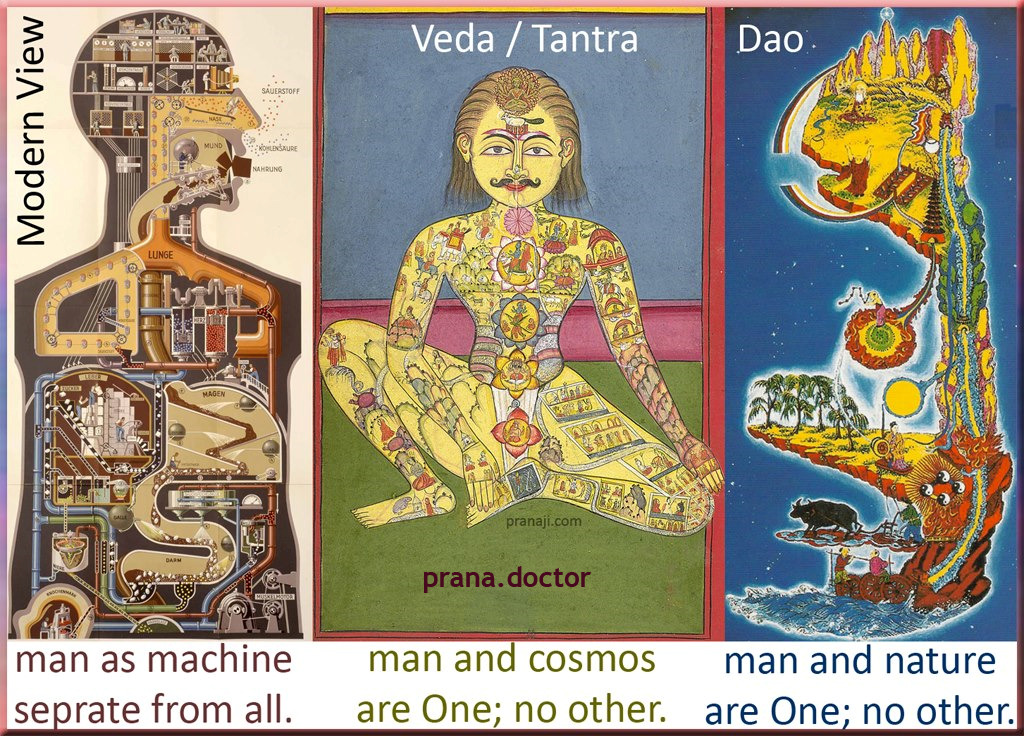
Art of traditional medicine cannot be separated from some form of transcendent perspective—whether it be simply a sense of interconnectedness or a more fully developed cosmology/spirituality.
Although Ayurveda has roots in Yogic and Vedic views, Chinese Medicine has roots in Daoist and/or Buddhist views, and CranioSacral has roots in mysticism (Christianity and Trika), however, none of these traditional medicine requires a person to be spiritual or follow Buddha or Dao or Christ or Shiva.
Yes, Ayurveda, Chinese Medicine, and CranioSacral Work hold that a person’s ultimate goal is to find their spiritual path. No herbal formula, no protocol, in the classical texts of Ayurveda, Chinese Medicine, or Cranial Osteopathy will manufacture that recognition for you. What they address is the floor: the fixation Dr. Stone speaks of above, i.e., physical, sensual, or mental blockage that keeps a person contracted, dis-integrated, unable to feel whole. Medicine does not produce awakening. It removes what awakening would otherwise have to work around.
To me, medicine is about helping a person live fully in a body no longer working against them, not a separate track from their deeper path, but the ground it moves through. Traditional medicine does not manufacture spiritual realization. But the body it restores is the same body through which that realization, if it comes, will move.