
Manipura | Gate of Destiny | The Celiac Plexus
The celiac plexus or solar plexus or manipura (3rd chakra) is not simply a cluster of autonomic ganglia. Nor is it merely a subtle energetic center. It is a convergent regulatory nexus, a place where metabolism, autonomic signaling, affective experience, and the lived sense of vitality intersect. Both modern physiology and the world’s oldest medical traditions have independently arrived at the same conclusion: something of singular importance resides here.

✦ Ancient Wisdom & Modern Science : Manipura & Mingmen
✦ Biological & Metabolic Functions
✦ Bioelectric Properties & EMF
✦ Psychological Trauma & Emotional Disruption
✦ Dietary and Nutritional Protection
✦ Lifestyle and Somatic Practices
Anatomy & Structure
What the celiac plexus is, where it lives, and why its architecture challenges conventional classification
The celiac plexus, also known as the solar plexus, manipura chakra, gate of destiny or ming-me, is the largest and most complex autonomic nerve plexus in the human body. It occupies the retroperitoneal space at the level of the T12–L1 vertebrae, wrapping around the origins of the celiac trunk and superior mesenteric artery in close proximity to the kidneys and adrenal glands. Its position is deep, central, and strategic.
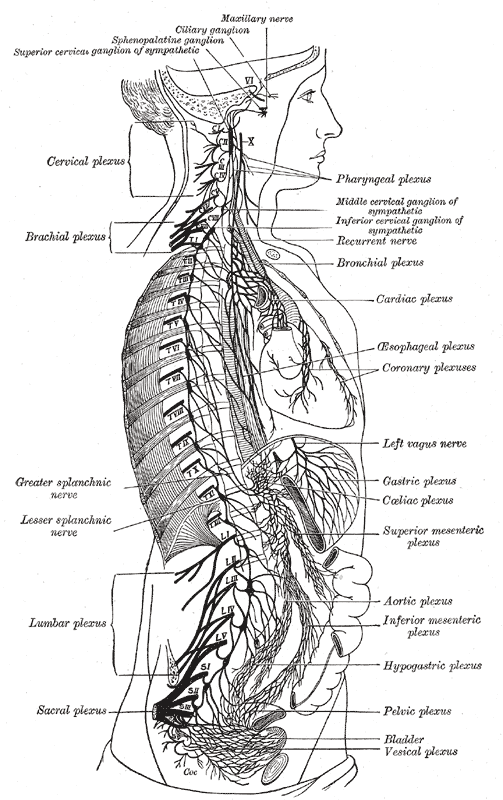
Structurally, the plexus is a composite entity, not a single uniform tissue but a sophisticated assembly of neural ganglia, nerve fiber networks, connective tissue scaffolding, and microvascular supply. At its core are the celiac ganglia has typically two asymmetric masses embedded within the plexus, which are the true cellular powerhouses of its function.
Despite possessing a defined location, its own connective tissue architecture, adequate blood supply, and system-wide physiological influence, the celiac plexus remains formally classified as a component of the peripheral nervous system — not as a discrete organ. This classification may reflect historical convention more than scientific judgment.
Histological Architecture
The celiac plexus possesses a three-layer connective tissue envelope that closely mirrors the organization of recognized organs. An outer epineurium-equivalent of dense irregular connective tissue blends with retroperitoneal periaortic fascia; a perineurium-equivalent surrounds individual nerve fascicles and acts as a diffusion barrier; and an inner endoneurium provides the loose connective tissue scaffolding within fascicles, housing the vasa nervorum capillary network. Fibrous septa extend inward from the ganglionic capsule, dividing each ganglion into distinct lobules — a hallmark of organ-level structural organization.
Cellular composition includes large multipolar neurons, satellite glial cells surrounding each neuron, Schwann cells along all nerve fibers, and scattered chromaffin-like cells.
Ancient Wisdom & Modern Science
The world’s oldest medical traditions independently identified this region as a center of transformative vitality and physiology is now beginning to understand why.
Daoist Medicine : Mìngmén 命門 Gate of Destiny
Located between the kidneys, the Mìngmén is described as the repository of constitutional vitality and existential direction. The Ministerial Fire (Xiānghuǒ) residing here drives all transformative processes in the body correlates to the adrenal-hepatic-sympathetic activation axis now understood through modern physiology.
Yogic Tradition Maṇipūra Chakra
The “City of Jewels” — the energetic center associated with metabolic power, will, and transformative fire (Agni). Linked to the digestive fire that converts food into vitality. Associated with agency, self-definition, dignity, and directed will. Corresponds anatomically to the solar plexus region with remarkable precision.
The Daoist alchemical transformation of Jīng (essence) into Qì (vital energy) corelates to the biological conversion of stored substrates into metabolically available energy. The liver’s transformation of glycogen into glucose, the adrenal activation of sympathetic arousal, and the enteric regulation of nutrient assimilation together constitute a continuous process through which potential becomes activity. The traditional metaphor of “inner fire” may represent not merely a spiritual metaphor, but a correlation to experiential map of real neuroendocrine and metabolic processes of thermogenesis, energy mobilization, and systemic activation.
Both Daoist and Vedic systems placed this region anatomically between the kidneys, remarkably consistent with the actual anatomical position of the celiac plexus at T12–L1, in direct proximity to the adrenal glands and kidneys. These traditions recognized, through somatic observation and contemplative practice, what anatomy would later confirm through dissection: that something of functional supremacy resides in the deep center of the abdomen.
When chronic stress, trauma, or sustained sympathetic activation disrupts this integration, the celiac plexus region becomes characterized by what traditional systems called energetic stagnation or fire depletion and what contemporary neuroscience describes as increased physiological impedance, in which communication between the enteric nervous system, autonomic centers, and higher cortical networks becomes dysregulated.
Biological & Metabolic Functions
The celiac plexus as an autonomic command center, metabolic transducer, and immunological regulator
The celiac plexus serves as the principal autonomic command center for virtually the entire upper abdominal cavity. Its efferent fibers reach every major visceral target; its afferent fibers carry constant sensory intelligence back to the central nervous system. The scope of its regulatory authority is without parallel in the peripheral nervous system.
Visceral Innervation
Stomach: Motility · Acid Secretion
Regulates gastric emptying rate and acid production. Sympathetic activation slows digestion; parasympathetic input accelerates it. The celiac plexus coordinates the transition between these states.
Liver: Glucose · Detoxification
Directly controls hepatic glycogenolysis — the conversion of stored glycogen into circulating glucose — and modulates bile flow. A primary metabolic thermostat of the body.
Pancreas: Insulin · Enzymes
Modulates both endocrine (insulin/glucagon) and exocrine (digestive enzyme) secretion, and coordinates the timing of enzyme release with gastric emptying.
Adrenal Glands: Epinephrine · Norepinephrine
Provides preganglionic fibers directly to the adrenal medulla — itself a modified sympathetic ganglion. Through this unique pathway, the celiac plexus triggers whole-body stress responses.
Spleen & Immunity : Cytokines · Immune Cells
Sympathetic fibers regulate immune cell mobilization and cytokine release through the neuro-immune axis. Celiac plexus dysregulation produces measurable immune suppression.
Kidneys & Small Intestine : Renin · Peristalsis
Controls renin release and renal blood flow, and coordinates small intestinal peristalsis. The gut microbiome composition is directly influenced by the motility patterns the celiac plexus sets.
Metabolic Functions
Glucose Homeostasis
The celiac plexus plays a direct, not merely modulatory, role in glucose regulation. Sympathetic signals transmitted through the celiac plexus govern hepatic glucose output, insulin and glucagon secretion, and glycogen mobilization simultaneously. Animal studies involving celiac ganglionectomy demonstrate significant metabolic disruption, confirming that the plexus is not a passive relay but an active metabolic participant. This positions the celiac plexus as a critical — and underappreciated — target in understanding metabolic disease.
The Adrenal Medulla: A Unique Relationship
The celiac plexus provides preganglionic sympathetic fibers directly to the adrenal medulla — a relationship that is anatomically singular. Because the adrenal medulla is embryologically and functionally a modified sympathetic ganglion, the celiac plexus is its primary neural controller. Through this pathway, the celiac plexus can trigger whole-body metabolic shifts via epinephrine and norepinephrine release, influencing heart rate, blood pressure, blood glucose, and energy substrate mobilization simultaneously. This is the anatomical basis for the immediate whole-body response to visceral terror or abdominal trauma.
Digestive Coordination
The celiac plexus orchestrates the timing of pancreatic enzyme release relative to gastric emptying, regulates the sphincter of Oddi governing bile and pancreatic juice flow, and influences the composition of the gut microbiome through motility pattern control. It is, in the most literal sense, the conductor of the digestive orchestra.
Visceral Pain Transmission
The celiac plexus is the primary relay pathway for visceral pain signals from upper abdominal organs. Afferent pain fibers from the stomach, pancreas, liver, and intestines travel with sympathetic fibers through the splanchnic nerves, synapsing in the celiac ganglia before ascending to the spinal cord and thalamus. Critically, the plexus does not merely transmit pain — it modulates the intensity and quality of visceral pain signals, acting as a peripheral filter. This is the anatomical basis for the clinical efficacy of celiac plexus nerve block in pancreatic cancer pain management, one of the most effective procedures in interventional pain medicine.
Bioelectric Properties & EMF
The celiac plexus as an electrically active, field-generating structure — and what that means for detection and interaction
Spontaneous Tonic Activity
Unlike many peripheral neural structures that are electrically silent at rest, the celiac ganglia exhibit tonic spontaneous electrical firing. This pacemaker-like activity maintains baseline visceral autonomic tone without requiring continuous central nervous system input, a functionally significant property that distinguishes the celiac plexus from simple relay structures and strengthens the case for its recognition as a functionally autonomous entity.
The celiac plexus integrates simultaneous electrical input from multiple sensory modalities : mechanical stretch receptors in the gut wall, chemoreceptors monitoring luminal chemistry, thermoreceptors, and nociceptors. It processes these locally before relaying centrally. This constitutes a form of peripheral neural computation that reduces the information processing burden on the CNS.
The Plexus as an EMF Generator
Any electrically active tissue generates a surrounding electromagnetic field which an unavoidable consequence of ionic current flow through neural tissue. The celiac plexus, with its dense ganglionic neurons and tonic spontaneous activity, generates a measurable local electromagnetic field. Additionally, its collagen-rich connective tissue capsule possesses piezoelectric properties implying that the mechanical pressure from the adjacent pulsing aorta continuously generates small electrical signals within the connective tissue scaffold. The celiac plexus is therefore both an electrochemical and a mechanically-transduced bioelectric generator.
Psychological Trauma & Emotional Disruption
How the inner life becomes biology — the celiac plexus as the anatomical interface between psychological experience and visceral function
The connection between emotional experience and celiac plexus function is not metaphorical, it is hardwired through direct anatomical pathways. The hypothalamus projects directly to the intermediolateral cell column of the thoracic spinal cord, which sends preganglionic fibers via the splanchnic nerves to synapse directly on celiac ganglia neurons. Every significant emotional state generates immediate neurochemical changes at the celiac plexus not through slow hormonal diffusion but through real-time neural transmission.
Stephen Porges’ Polyvagal Theory provides an additional explanatory framework: the vagus nerve, a major input to the celiac plexus, has three evolutionary tiers : ventral vagal (social engagement), sympathetic (fight/flight), and dorsal vagal (freeze/shutdown). Trauma and chronic threat states shift vagal tone measurably, and this shift directly and quantifiably alters celiac plexus function.
The celiac plexus is the anatomical interface between psychological reality and visceral biology, converting emotional states into physiological function in real time, bidirectionally, and with whole-body consequences.
The Neurochemical Cascade
Chronic Psychological Stress leads to : Hypothalamic activation → ↑CRH → ↑Cortisol
Splanchnic nerve hyperactivation leads to : Celiac Ganglia — chronic norepinephrine release → Ganglionic sensitization · Neuroinflammation · Oxidative stress → Downstream visceral dysfunction
Specific Emotional States and Their Effects
Acute Terror & Shock
Activates the hypothalamic-splanchnic axis within milliseconds. Triggers immediate cessation of gut motility, sphincter dysregulation, splanchnic vasoconstriction, and direct adrenal medulla flooding via celiac innervation. The well-known “gut punch” sensation of shock has precise neuroanatomical explanation. Repeated episodes produce ganglionic sensitization, a self-sustaining lowering of activation threshold.
Primary target: Adrenal medulla · Bowel
Complex PTSD & Developmental Trauma
Childhood trauma fundamentally restructures autonomic baseline. The celiac plexus becomes locked in chronic sympathetic dominance. ACE (Adverse Childhood Experiences) studies demonstrate direct correlation between trauma severity and functional gastrointestinal disorders : IBS, functional dyspepsia, chronic abdominal pain — mediated through celiac plexus dysregulation.
Primary target: Entire abdominal viscera
Chronic Anxiety
Sustained norepinephrine release at the celiac ganglia; altered visceral pain thresholds; HPA axis hyperactivation. A frequently overlooked mechanical component: shallow, thoracic breathing patterns generate repetitive mechanical stress on the celiac plexus through altered diaphragmatic movement, compounding neurochemical disruption with physical compression.
Primary target: Stomach · Small intestine
Grief & Profound Loss
Activates the anterior cingulate cortex and insula, which modulate vagal tone to the celiac plexus. The physical ache in the solar plexus region during grief, appetite loss, and digestive shutdown have neuroanatomical explanation. Bereaved individuals show measurable heart rate variability changes reflecting widespread autonomic disruption cascading through the plexus axis.
Primary target: Stomach · Appetite regulation
Suppressed Anger
More damaging than expressed anger. Creates sustained low-grade sympathetic activation with chronic norepinephrine release and progressive ganglionic sensitization. The liver, directly innervated by the celiac plexus, appears particularly vulnerable. This provides neuroanatomical basis for the traditional Chinese medical association between liver pathology and suppressed anger.
Primary target: Liver · Stomach
Chronic Shame
Produces a uniquely dysregulating mixed autonomic state leading to simultaneous sympathetic activation and dorsal vagal shutdown. This conflict state at the celiac plexus level correlates with inflammatory bowel conditions, chronic nausea, disordered eating, and adrenal fatigue patterns. The simultaneous opposing inputs create a form of autonomic paralysis particularly damaging to ganglionic health.
Primary target: Pancreas · Gut immunity
Somatic Trauma Storage
A convergent body of clinical evidence supports the concept that the celiac plexus region is a primary site of somatic trauma retention. Peter Levine’s Somatic Experiencing framework identifies the celiac region as a consistent locus of somatic trauma storage. Bessel van der Kolk’s research documents how trauma alters autonomic function in ways that persist at the visceral level, with patients consistently reporting sensations in the solar plexus region during trauma processing. The freeze response, mediated through autonomic pathways involving the celiac plexus, is proposed as the mechanism of somatic trauma retention.
This psychosomatic dimension aligns strikingly with the traditional systems’ understanding of this region. Where Daoist medicine describes the Mìngmén as potentially depleted by fear and existential shock, and the Maṇipūra chakra as disrupted by shame, powerlessness, and loss of agency, modern trauma neuroscience arrives at the same functional conclusions through a different methodology. The subjective experience of lost groundedness, fragmented embodied selfhood, and diminished vitality is recognized across these traditions as signs of disruption in this center and corresponds precisely to the dysregulated autonomic profile that the celiac plexus exhibits under chronic stress or trauma.
Dietary and Nutritional Protection
| Agent | Mechanism | Evidence |
|---|---|---|
| Omega-3 Fatty Acids | Reduce neuroinflammation; protect vasa nervorum integrity | Well established |
| Magnesium | Nerve conduction support; competes with ectopic calcium deposition | Well established |
| Vitamin K2 | Activates matrix Gla protein — prevents arterial and ganglionic calcification | Established |
| Alpha-Lipoic Acid | Studied specifically for autonomic neuropathy protection; glutathione precursor | Clinical evidence |
| Curcumin | NF-κB pathway inhibition; anti-neuroinflammatory | Pre-clinical & clinical |
| Vitamin D3 | Calcium regulation; direct neuroprotection | Established |
| Resveratrol | Neuroprotective; anti-calcific properties | Pre-clinical |
Lifestyle and Somatic Practices
Diaphragmatic breathing is perhaps the most direct intervention available. The celiac plexus sits immediately adjacent to the diaphragm. Deep, diaphragmatic respiration creates rhythmic mechanical stimulation of the plexus region, maintains tissue perfusion, and activates the vagal pathways that provide inhibitory modulation to the plexus. It is simultaneously mechanical therapy and neural reset.
Aerobic exercise maintains the integrity of vasa nervorum, the microvascular network supplying the ganglia, and enhances vagal tone, the primary inhibitory influence on sympathetic celiac activation. Yoga and pranayama have documented autonomic modulation effects. High vagal tone, achieved through deep breathing, humming, qi gong, and meditation, is broadly neuroprotective for the entire autonomic system.
Strict glycemic control represents the single most important modifiable risk factor for autonomic ganglia health. Hyperglycemia promotes advanced glycation end product (AGE) formation, which damages ganglionic neurons through a mechanism similar to peripheral diabetic neuropathy. The celiac ganglia are vulnerable through exactly the same pathway.
Therapeutic Recovery
The adult celiac ganglia retain significant neuroplasticity. Ganglionic neurons can form new synaptic connections; neurotrophic factors including Nerve Growth Factor (NGF) support ganglionic recovery. Trauma-focused therapies such as Somatic Experiencing, Craniosacral work, Nondual practices, trauma-sensitive yoga have documented autonomic normalization effects. Vagal nerve stimulation is increasingly supported by clinical evidence for autonomic balance restoration.
The celiac plexus stands at a genuine frontier, between the nervous system and endocrine system, between brain and gut, between modern physiology and ancient contemplative medicine. It converts psychological reality into visceral biology in real time. It generates a bioelectric field that extends beyond the body. It carries the somatic imprints of the life it has lived. Whatever we choose to call it, it deserves far more than it currently receives: focused scientific attention, formal anatomical recognition, and a central place in any serious integrative understanding of human health.