Three Primary Pathways Through the Darkness
In the quest for awakening, we eventually find ourselves standing before a dark door. Behind it lies everything we fear, everything we have rejected, and everything we have yet to become.
In the West, it is called the Shadow. In the East, it is the Demon of Avidya (faulty knowing).
Shadow is avidyā localized in the personal psyche. Avidyā is Shadow universalized to all experience.
While the destination is the nondual consciousness, the maps we use to get there are shaped by the cultures that birthed them.
There are three archetypal paths in the inner journey towards the awakening: one that illuminates the darkness, one that offers itself into it, and one that recognizes it as never separate to begin with.
Depending on your temperament, you may find yourself drawn to the one or more of them.
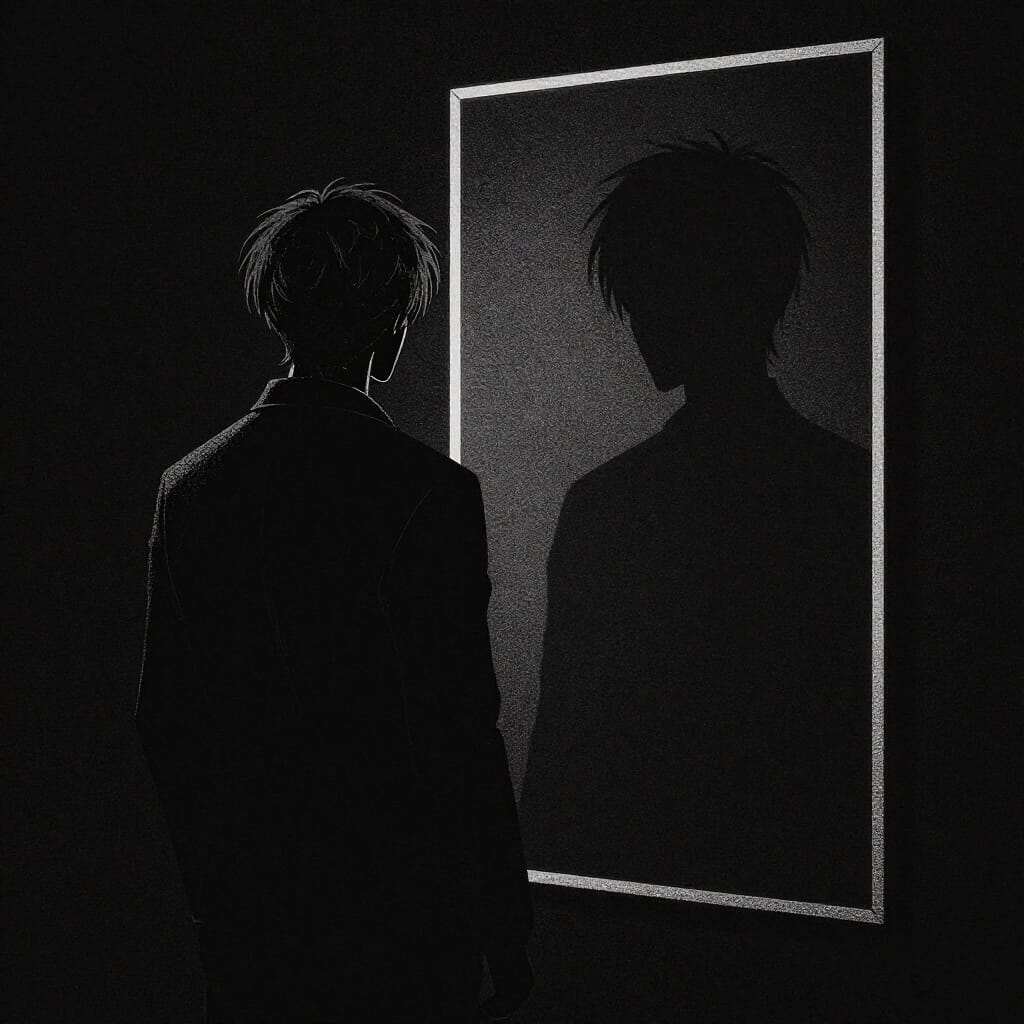
In the language of depth psychology, the first is the path articulated by Carl Jung, the gradual integration of the Shadow. In Siddha tradition, the second appears in the radical gestures of the Avadhūta and Machig Labdrön (feeding the demons), the offering of the ego-self into the very forces it fears. The third, refined in the nondual tradition of Trika, does something more subtle: it neither integrates nor surrenders, but recognizes.
At first glance, these approaches seem divergent in method and metaphysics. Yet they orbit a shared goal: the transformation of what is rejected into what is realized.
- Jung and Integration through Illumination

Jung’s psychology arises within a cultural psyche that values structure, differentiation, and conscious agency. The Shadow is not an adversary but an unknown.
Through dream work, symbolic interpretation of projection, and active imagination, unconscious material is brought into dialogue with the conscious mind. The Shadow is personified, engaged, and gradually integrated.
This is a path of containment. The ego remains intact but becomes more inclusive, more permeable. The individual learns to say: this too is me.
Its strength lies in psychological stability and ethical maturation. It is particularly suited for minds that seek clarity, coherence, and a grounded sense of self before venturing into deeper waters.
Yet its subtle limitation persists: the integrator remains. The I-ness becomes whole but still the centre.
“One does not become enlightened by imagining figures of light but by making the darkness conscious.” — C. G. Jung.
2. Avadhūta and the Path of the Feast
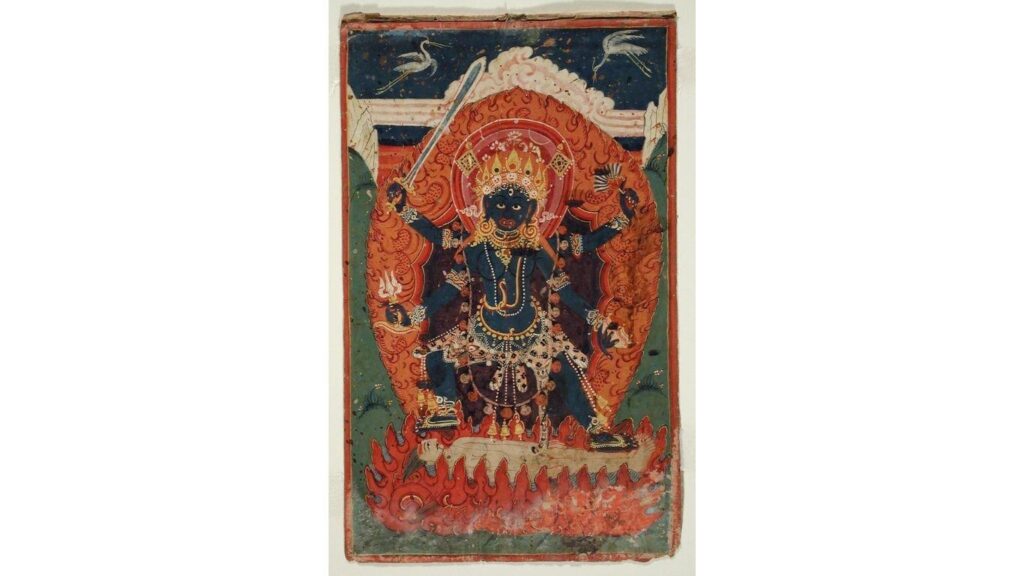
In contrast, the Avadhūta and Machig Labdrön’s Chöd tradition invert the movement. Here, the approach is not to negotiate with the darkness, but to feed the identity to it until nothing remains but the Awakened Self.
Here, the demon is not integrated — it is fed.
The practitioner visualizes offering their own subtle body, identity, and attachments as nourishment to the feared forces. Rather than analysing the demon, they become food for it.
This is not regression but a precise dismantling of duality. The demon represents clinging, aversion, and ultimately avidyā (faulty knowing). By feeding it, the subtle structure that sustains it collapses.
For the devotional mind, steeped in the awareness of the impermeant nature of the self, this is a Radical Generosity.
This is a path of transmutation. Not integration into the ego/I-ness, but dissolution of the fixed identity of ego-mind into awareness. It resonates with devotional and nondual sensibilities, where surrender is revelation.
Here, one does not say this too is me, but there is no separate me apart from this.
“If you think there is a demon, it will eat you. If you know it is your own mind, you are liberated.” — Machig Labdrön
Trika: The Path of Recognition

The Trika tradition introduces a third way, one that neither refines nor relinquishes the self.
Instead, it asks: What if the Shadow, the demon, and the one who fears them are all movements within a single, indivisible field of Consciousness?
In Trika, avidyā is not merely ignorance to be removed; it is a self-veiling power of consciousness itself (Śakti). The Shadow is not something to be integrated, nor a demon to be fed. It is already an expression of the same luminous awareness that seeks to transcend it.
The practice, therefore, is recognition (pratyabhijñā).
Rather than engaging or surrendering to the content, one turns attention to the field or luminous space in which the content appears. Fear, contraction, shadow — these are not obstacles but textures of consciousness.
Nothing is rejected. Nothing is sacrificed. Everything is recognized as That.
This is a path of immediacy. It does not require progressive integration nor dramatic dissolution, but a shift in awareness, from the contracted self to the luminous space of nondual consciousness in which all contractions arise.
Its risk is subtle: premature identification with nondual awareness without sufficient psychological grounding.
There is neither darkness nor light in the Self. The ‘Shadow’ was a dream, the ‘Ego’ was a dream, and the ‘Integration’ was also a dream.
“Consciousness itself is the Self”. — Vasugupta (Shiva Sutra)
A Final Reflection

One path says: Turn toward the Shadow and understand it.
Jung: engage shadow via dialogue → integration → expanded self
Another says: Offer yourself to it and dissolve.
Avadhūta: invite and face the demon → feeding → dissolution, ally
The third says: See that neither you nor it were ever separate.
Trika: abide as awareness without rejection → recognition → spontaneous liberation
Between them lies a spectrum of readiness, temperament, and insight.
Beyond them lies something even more intimate:
A recognition that enlightenment, surrender, and awareness are not separate paths, different expressions of the same unfolding awareness.
The journey begins where you are inclined and deepens as what you are becomes less confined and less fixed.
Your shadow is not a mistake of nature. It is either a fragment seeking a home (Jung), a ghost seeking a meal (Avadhūta, Machig), or a disguise seeking recognition (Trika).
Which Path Is Yours? (The Three Gateway Questions)
To know which inner path or paths resonates with your current stage of awarenss, ask yourself these three questions:
I. The Jungian Inquiry
“When I encounter a dark part of myself, is my deepest instinct to understand its history and find a way to live with it in a more balanced, functional way?”
· If this resonates, your path may begin with illumination, honoring the psyche’s need for clarity and integration.
II. The Avadhūta / Chöd Inquiry
“Am I so exhausted by the struggle of ‘being a self’ that I am willing to surrender my entire identity, fears and successes alike to the Divine, trusting that only the Truth will remain?”
· If this speaks to you, your path may be one of devotional surrender where transformation comes through relinquishment.
III. The Trika Inquiry
“Can I look at my deepest darkness, in the midst of fear, contraction, or shadow, recognize it as the creative power of Consciousness expressing itself through me?”
· If this feels intuitively true, your path may be recognition where nothing needs to resisted or rejected for truth to be seen.
Understanding these paths intellectually is the first step, but the Shadow only truly reveals its secrets in the crucible of practice. If this resonates with your inquiry and feel called to deepen this exploration, you are welcome to reach out and begin a more personal dialogue. I offer nondual practice sessions and ongoing guidance to help you. You do not have to walk the healing path alone.